Misselthwaite Manor
Misselthwaite Manor is the ancient, six-hundred-year-old Yorkshire estate of Archibald Craven, a vast and gloomy house on the edge of the moor where the central events of the novel unfold. It is the site of the locked secret garden, the hidden invalid Colin, and the transformative friendship between Mary Lennox, Dickon Sowerby, and Colin Craven, making it the physical and symbolic heart of the story's movement from isolation and death toward life and connection.
Architecture and Atmosphere
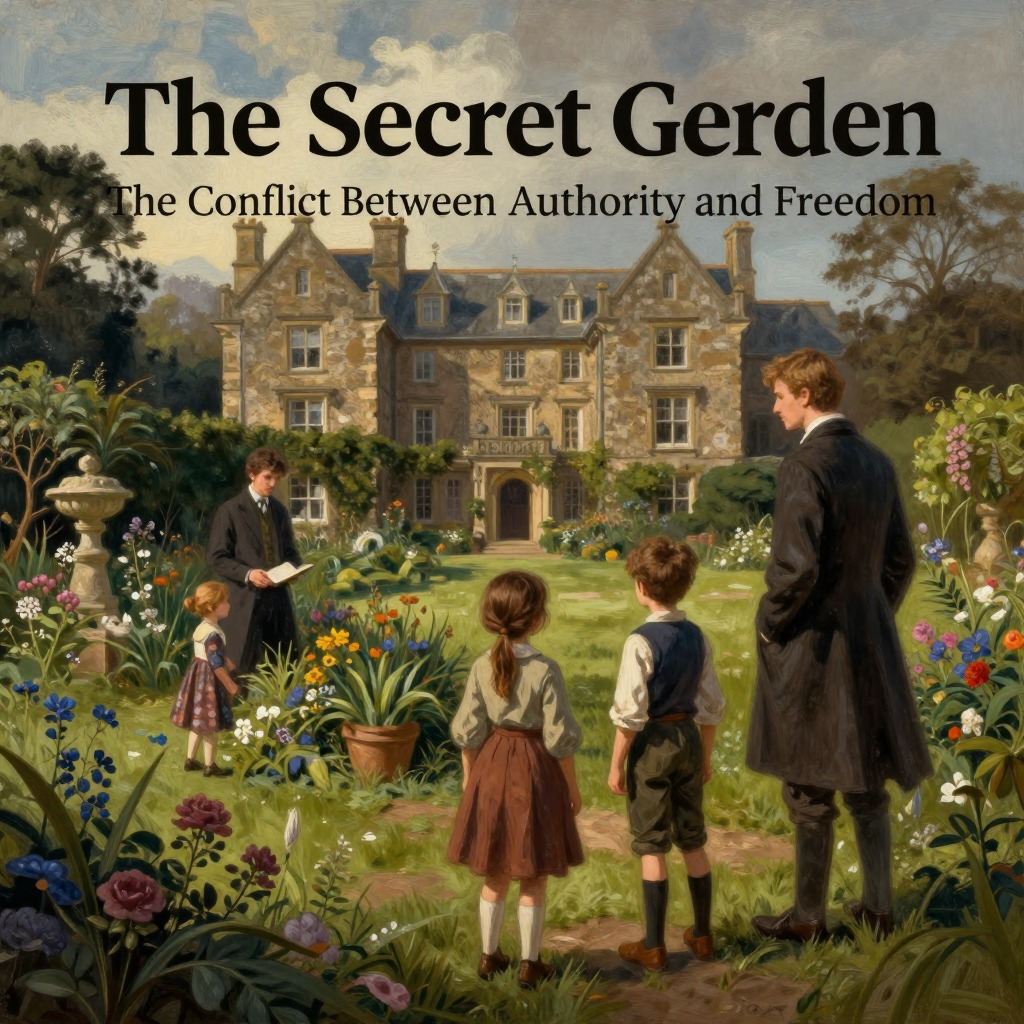
The manor is described as a "grand big place in a gloomy way," with nearly a hundred rooms, most of which are shut up and locked. It is built of massive, curiously shaped panels of oak studded with big iron nails and bound with great iron bars, and its entrance opens into an enormous, dimly lit hall filled with portraits and suits of armor that make a new arrival feel small and lost. The house rambles around a stone court, and its long, dark, vault-like avenue of trees contributes to an overwhelming sense of desolation. Mrs. Medlock, the housekeeper, tells Mary that the house is six hundred years old and stands on the edge of the moor, with a big park, gardens, and trees with branches trailing to the ground. The interior is equally oppressive: Mary's own room is hung with tapestry depicting a forest scene, and the nursery prepared for her is a grown-up person's room with gloomy old pictures and heavy oak chairs, containing nothing amusing. The house is so silent and empty that Mary, wandering through its corridors and unlocked rooms, feels as if no one but herself has ever walked there.
The West Wing and the Master's Seclusion
Archibald Craven, the master of Misselthwaite, is a hunchback who shuts himself up in the West Wing and will not let anyone but Mr. Pitcher see him. He cares about nobody, won't see people, and most of the time goes away entirely. When he is at home, he lives in remote rooms attended only by Pitcher, an old fellow who took care of him as a child and knows his ways. The servants live a luxurious life below stairs when the master is away, but the overall atmosphere is one of neglect and sorrow. Mr. Craven's orders are that his troubles are none of the servants' business, and he has forbidden any discussion of the locked garden or of his son Colin.
The Secret Garden and Colin's Confinement
The most significant feature of Misselthwaite is the secret garden, which Mr. Craven locked after his wife Lilias died from a fall in it ten years before the story begins. He buried the key and forbade anyone to enter. The garden is located within the manor's grounds, accessible through a hidden door under thick ivy on the Long Walk. Colin, Mr. Craven's son, is kept in a room in a remote part of the house, a big room with ancient, handsome furniture and a carved four-posted bed hung with brocade. He is a secret from the household, and the servants are forbidden to speak about him. Mary discovers him only by following the sound of his crying through the dark corridors at night.
Transformation and Rebirth
The manor is the setting for the children's secret activities and their gradual physical and emotional recovery. Mary and Dickon work in the secret garden, and Colin is eventually brought there in his wheelchair. The garden's revival mirrors the children's own transformation, and the manor itself begins to change as Colin grows stronger and more cheerful. The servants notice the difference, and even the head gardener, Mr. Roach, is summoned to Colin's room for the first time. The climax of the novel occurs when Archibald Craven, returning from his travels, walks through the manor's grounds and into the secret garden, where he finds Colin standing and walking, fully recovered. The final scene shows the master of Misselthwaite walking across the lawn with his son, both transformed by the life that has returned to the ancient house and its hidden garden.